
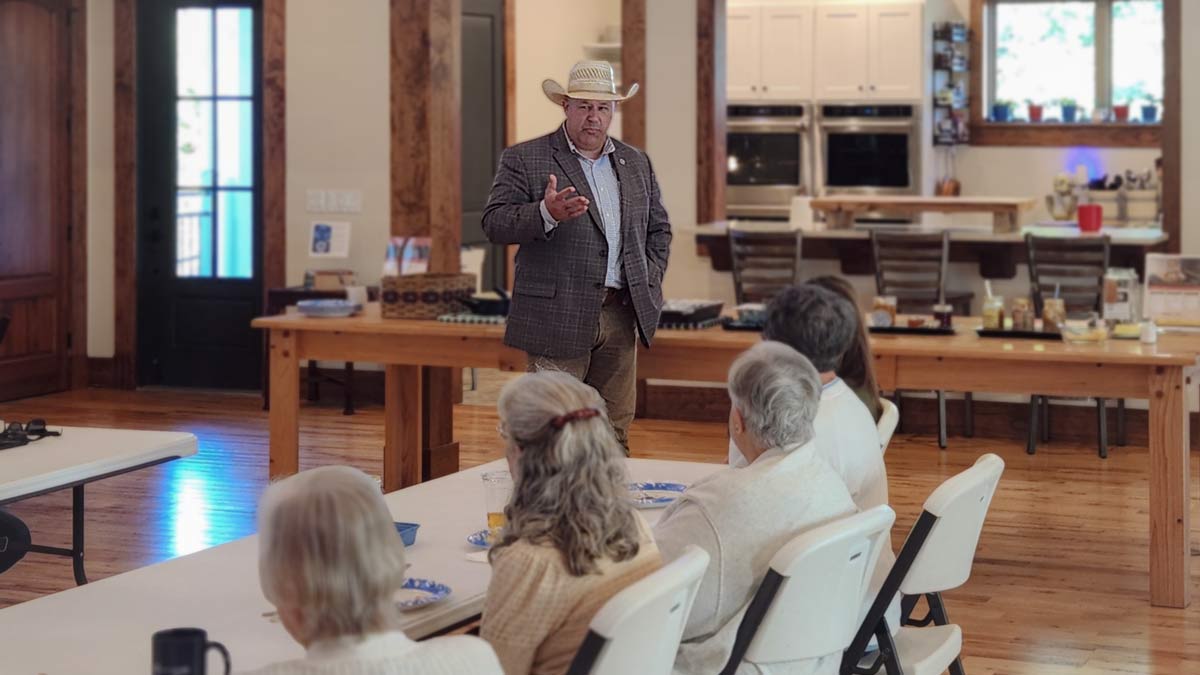
The Ledge recently welcomed Andy Holt, Deputy Commissioner of the Tennessee Department of Agriculture, and Logan Hess, Assistant Commissioner, for an educational presentation on farmland preservation and conservation easements. Community members had the opportunity to learn about Tennessee’s new Farmland Preservation Program, ask questions, and explore how conservation easements can help protect working farms and forests for future generations.
The discussion focused on a topic that matters to many Tennessee families: how to preserve the land they’ve worked hard to maintain while creating opportunities for future generations to continue that legacy.

Why Farmland Preservation Matters
Tennessee’s farms and forests are an important part of our state’s economy, heritage, and way of life. As communities grow and development expands, many landowners are exploring options that will allow their property to remain in agricultural or forestry use long into the future.
Throughout the presentation, Holt and Hess emphasized that the strongest form of preservation is keeping agriculture and forestry economically viable. When land continues to produce value through farming and forestry, families have greater opportunities to keep that land intact and productive.
For some families, conservation easements offer an additional tool to support those goals.
What Is a Conservation Easement?
A conservation easement is a voluntary legal agreement that permanently limits certain types of development on a property while allowing the landowner to retain ownership.
Under a conservation easement:
- The landowner continues to own the property.
- Agricultural and forestry activities may continue.
- Development rights are restricted according to the terms of the easement.
- The easement remains with the property even if ownership changes.
One of the key points emphasized during the presentation was permanence. Conservation easements are designed to last forever, meaning future owners and heirs will also be bound by the agreement. Because of that, landowners should carefully consider both their current goals and the long-term impact on future generations.
Tennessee’s Farmland Preservation Program
The Tennessee General Assembly recently established funding for the Tennessee Farmland Preservation Program to help landowners place qualifying agricultural and forest land into permanent conservation easements.
According to the presenters, the goal is to provide landowners with another option for protecting valuable farm and forest land while maintaining private ownership.
How the Application Process Works
The Tennessee Farmland Preservation Program begins with landowners determining whether their property qualifies as agricultural or forest land under the program guidelines. Eligible landowners must partner with a qualified conservation easement holder, such as an approved land trust or conservation organization, to prepare and submit a joint application.
Applications require supporting documentation, including property maps, ownership records, tax information, and, in some cases, management plans. Once submitted, the Department of Agriculture reviews and scores each application based on factors such as development pressure, conservation value, agricultural or forestry significance, and proximity to other protected lands. Applications must meet minimum scoring requirements to be considered for funding.
If selected, the landowner and easement holder move forward with appraisals, surveys, and final easement documentation. After the easement is recorded, the property remains privately owned and can continue to be farmed or managed for forestry. The easement holder is responsible for monitoring the property over time to ensure the terms of the agreement are upheld.

Common Questions from Attendees
The presentation generated thoughtful discussion from local landowners who wanted to better understand how conservation easements work in practice.
One of the most common questions was whether landowners still own their property. The answer is yes. A conservation easement does not transfer ownership of the land. Instead, it places agreed-upon restrictions on future development while allowing the owner to continue farming, forestry, and other approved activities.
Another frequent question involved selling or transferring property. Land can still be sold, inherited, or transferred, but the conservation easement remains attached to the property and continues to apply to future owners.
Attendees also asked about the long-term commitment involved. Holt and Hess stressed that conservation easements are intended to be permanent and should be considered carefully before entering into an agreement.
A Tool for Landowners, Not a Requirement
One message was repeated throughout the presentation: conservation easements are an option, not an obligation.
Some families have a strong desire to ensure their land remains in agricultural or forestry use for generations to come. Others may prefer to leave future decisions open. Every property and every family has different goals.
The Tennessee Farmland Preservation Program was created to provide landowners with another tool that can help them achieve those goals if preservation is a priority.
Thank You for Sharing Your Expertise
We are grateful to Andy Holt and Logan Hess for taking the time to visit The Ledge and share this important information with our community. Their willingness to answer questions and explain the program gave attendees a valuable opportunity to learn more about the future of farmland preservation in Tennessee.
At The Ledge, we believe education strengthens communities. Events like this help connect people with resources, ideas, and opportunities that support informed decision-making for families, farms, and future generations.
This is your hall, and we always welcome topics and speakers that help our community learn and grow together. If you have ideas for future educational programs, we’d love to hear from you.