
Understanding Banking Changes, FDIC Coverage, and Financial Safety, with Centennial Bank’s Chris Rawdon
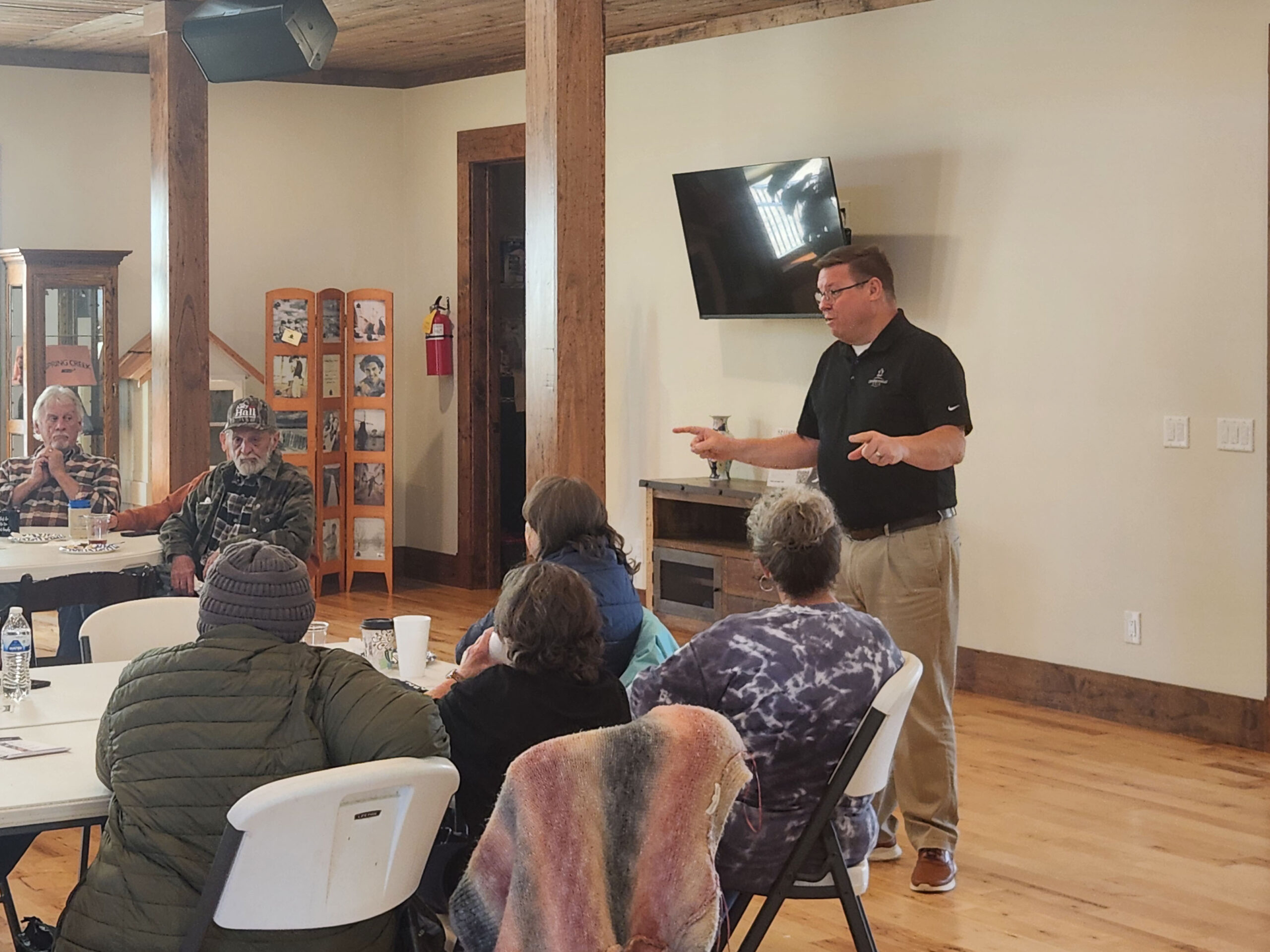
Our hall welcomed Chris Rawdon, Vice President of Centennial Bank in Medina for Biscuits ‘n’ Tips. Chris joined us to explain recent banking changes in Jackson, how FDIC coverage works, and how we can protect ourselves from fraud.
Recent Bank of Jackson Transition to Centennial Bank
Chris explained that Centennial Bank now includes the former Bank of Jackson, and all accounts have transferred over. This means customers can now use multiple Centennial Bank branches across Jackson. Everyone is on the same system, which makes access easier and helps the bank serve the community with consistency.
This change created questions about deposits, insurance, and how accounts are structured. Chris spent time helping everyone understand these details.
Understanding FDIC Insurance and Coverage Limits
Many people in the room asked about FDIC insurance, because changes between banks can create overlapping deposits.
Chris shared these important points:
FDIC covers up to 250,000 dollars per account type
This limit applies per depositor, per bank, per ownership category. The most common categories are:
- Single account
- Joint account
- Revocable trust account
- Certain retirement accounts
Joint accounts give each person their own coverage
A joint account with two people gets up to 500,000 dollars of FDIC coverage.

Trusts can increase coverage
Many people in our community use trusts for estate planning. A trust can extend FDIC coverage because beneficiaries are counted differently. Chris encouraged everyone to review their trust with an attorney, because the details matter.
Six months of temporary coverage after a bank merger
When one bank merges into another, FDIC gives customers six months of full coverage, even if the combined balances exceed 250,000 dollars. This gives people time to reorganize accounts safely.
How Banks Protect Large Deposits Through Third-Party Networks
Chris also talked about a service the bank uses to protect deposits beyond FDIC limits. Centennial partners with a third-party network that spreads deposits across many institutions. This allows customers to keep their relationship with one bank while receiving extended FDIC insurance.
The network places funds behind the scenes. Customers stay with Centennial, but the system allocates balances across different institutions to stay within coverage limits. Chris emphasized that the customer never deals with the other banks directly.
This service is helpful for:
- Families settling estates
- People managing trust funds
- Businesses with large operating accounts
- Anyone concerned about deposit insurance

How to Check Your Own FDIC Coverage
Chris mentioned an FDIC tool that many in the room had never heard of:
FDIC’s Electronic Deposit Insurance Estimator, often called EDIE.
This tool helps you:
- Enter all your accounts
- Select ownership types
- Add beneficiaries
- See immediately how much is insured
This is helpful for families reviewing accounts, seniors planning their estates, and anyone who wants to check on their financial health.
Fraud Prevention and Everyday Safety Tips
Fraud was a big topic. Several people shared stories that showed how quickly scammers adapt and how vulnerable anyone can be.
Chris shared practical steps we can take today.
Keep your contact information updated
The bank uses your phone number and address for fraud alerts. If these are outdated, the bank cannot reach you when something looks suspicious.
Use a strong password
Chris encouraged everyone to create passwords that are personal but not predictable. Small additions like numbers or symbols help, and updating passwords regularly is a simple form of protection.
Do not trust unexpected calls
If something feels wrong, hang up and call the bank directly using a number you know. Scammers are getting good at making calls sound official.
Use transaction alerts
Most banks offer alerts for card swipes, withdrawals, and transfers. These can help you spot fraud faster.
Credit cards have stronger protections than debit cards
Several community members shared real experiences with unauthorized charges. Chris explained that:
- Credit cards allow time to dispute charges.
- Debit cards pull money out immediately.
- Banks must follow dispute processes, but credit cards offer more breathing room.
Understanding Cash Reporting Rules
Someone asked about how much cash a person can deposit or withdraw without paperwork. Chris shared that banks must file reports when cash transactions total 10,000 dollars or more. This is federal law, and it helps prevent illegal activity. He encouraged everyone not to fear these reports because they are simply part of bank compliance.
Interest Rates and the Current Lending Environment
Chris also talked about interest rates and how they affect mortgages, vehicles, and lines of credit. Rates are changing often, so he encouraged people to stay connected to their banker and ask questions when they plan to borrow or refinance. He reminded everyone that credit scores, debt levels, income, and collateral all affect what rate a person receives.
Technology in Banking and How It Supports Community Members
Centennial Bank is using new tools like interactive teller machines that connect people to live bank staff through video. This gives customers more access during extended business hours. Chris said these systems will continue to expand so people across Jackson can get help early in the morning and later in the day.
Why Personal Relationships Still Matter
Even with new technology, Chris said the heart of community banking is personal connection. Many in our group nodded along. People still want someone they know, someone they trust, and someone who listens. That is why mornings like Biscuits ‘n’ Tips matter. We gather, share stories, and learn something new together.

A Morning Rooted in Community and Care
We are grateful to everyone who came out and to Chris Rawdon for spending the morning with us. He shared real information that helps us protect our families and understand the changing financial world.
Our hall belongs to all of you, and your questions make these events richer. When you speak up, you help others learn. When you tell your stories, you help someone else feel less alone.
If you have ideas for future topics or speakers, we want to hear them. Your input shapes our calendar and keeps our community strong.
Thank you for being here and for helping The Ledge grow through learning, connection, and shared experience.